

Author: César Gamboa, Senior Advisor, Law, Environment, and Natural Resources (DAR)
For over twenty years, those of us living in Lima have lived in a bubble of low prices thanks to the Camisea gas contract—what might be called the miracle of having gas beneath our soil—yet as often happens, we have failed to make proper use of it. It is not that we made poor decisions out of some inexplicable irrationality, but rather because petty, partisan interests have emerged that undermine the common good of all Peruvians.
The global context compels us to reflect deeply on the future of energy in Peru from a holistic perspective—one grounded in our history, in our role as a supplier of natural resources to the global market, and in the future, we seek to secure. Certainly, pressures will arise that impose conditions on the use of our resources; however, our greater concern should be how we prepare ourselves to confront the challenges posed by the geopolitics of the energy transition and the wars over natural resources (Elliott, 2026).
It is in this light that the rupture of the Camisea gas pipeline takes on heightened significance. The pipeline rupture in March (Campodónico, 2026; El Gato Encerrado, 2026) has exposed our fragility once again, forcing us to acknowledge our lack of planning and our tendency to leave everything to the whims of market interests. This situation is by no means new, nor is it one for which solutions have not been proposed in the past (Dávila & Gamboa, 2010). It is all too easy to find a scapegoat (Villanueva, 2026)—as has happened so often throughout history—in order to avoid discussing the fundamental issues, identifying those responsible for our errors, or extracting lessons learned to prevent us from repeating the mistakes of the past.
First Lesson: Prioritizing Domestic Demand for the Next 40 Years
Foto: Diego Saavedra/DAR
A primary lesson learned from the mismanagement of our energy resources is that we must secure Peru’s energy demand for the next 40 years—that is, at least through the year 2065. Looking back, a grave error was the shady deal surrounding the export of Camisea gas. It is no coincidence that an investigative commission was established and that we currently have a former president under house arrest. The «miracle» of Camisea was that Peru did not have to invest in exploration, as Shell and Mobil had already done so during the 1980s and 1990s, discovering the Cashiriari, San Martín, and Pagoreni fields. Subsequently, the Peruvian government failed to reach an agreement (Gamboa Balbin et al., 2008; Santillana & Salinas, 2018) with these companies; consequently, we were able to establish conditions prioritizing domestic gas consumption through the now-revered criterion of a «permanent 20-year horizon» (1). However, the Toledo administration later repealed this measure via Supreme Decree No. 031-2003-EM (2), thereby ceasing to prioritize domestic consumption to allow for the discretionary awarding of the Lot 56 contract—covering the Mipaya and Pagoreni fields—to Hunt Oil. This transaction was subsequently investigated by the Comptroller’s Office, has led to the indictment of a former president, and remains the subject of ongoing, unresolved investigations (Salaverry, 2017). It was at that moment that we lost control over our gas resources (Dávila & Gamboa Balbín, 2010; Gamboa Balbin et al., 2008).
We must ensure that sound business deals are struck and that our gas resources are reserved for domestic consumption. Those who are currently advocating for the extraction of natural gas from protected areas (Bill No. 14288/2025-CR, 2026) cannot guarantee that these resources will benefit all Peruvians. Let us, once again, consider the case of Camisea. Not only was the gas export project from Lot 56 prioritized over the last 16 years, but since operations began (Repsol, 2010), the economic benefits derived have been lower than those that would have been realized had the gas been consumed domestically (Ruiz Caro Reyes, 2019). Consequently, the necessary conditions do not exist to guarantee either a sufficient domestic supply or that the benefits derived from this gas reach all Peruvians. There is no guarantee that—once again, and in a discretionary manner—our natural resources will not be handed over, that political decisions devoid of any technical basis will not be made, or that the focus will not remain on exporting such a precious natural resource. The greatest challenge lies in the risk of corruption and the vested interests of a select few seeking to profit from our strategic resources (Campodónico Sánchez, 2018; Editor CNP2, 2009; Salazar, 2021).
Lesson Two: If we are to extract gas, let it be for the benefit of all Peruvians.
Foto: Diego Saavedra/DAR
At this crucial juncture—one that signals we must abandon fossil fuels and transition toward the use of non-conventional renewable energy sources (Heinberg, 2009; Ortiz, 2025)—it remains highly contentious to continue prioritizing the use of natural gas, even if it is less polluting than oil or coal. Nevertheless, we must adopt a pragmatic perspective regarding the pressures that geopolitical interests will exert within the region and the Amazon basin (Hegseth, 2026). Were we compelled to accept such a compromise—provided, of course, that its environmental and climatic impacts could be satisfactorily mitigated—a sine qua non condition for the extraction of this gas, the goal of this gas is for all Peruvians to benefit, not just a select few.
But how is it possible that, after 22 years of operation, specifically since 2004, the Camisea gas project has still failed to deliver gas to Cusco or to the rest of the national territory? Camisea gas has undoubtedly reached destinations such as Mexico, California, Spain, or Japan (Urgente24, 2025), yet it has failed to reach a single citizen in the Andes or the Amazon region. Why? The fragile state of the Camisea pipeline infrastructure connecting to Lima is not the result of initial opposition from environmental groups but rather stems from an initial failure to plan for our national growth (Subirana, 2026). It was not environmental concerns that hindered the expansion of gas infrastructure, but rather a lack of political will and economic investment—factors that prevented the necessary expansion from taking place. More than twenty years have passed, and the effort to achieve widespread gas access has succeeded only in extending this resource to the Peruvian coast—and at a painstakingly slow pace. Furthermore, corruption scandals surrounding the Southern Andean Gas Pipeline project prevented the construction of this vital infrastructure between 2011 and 2015 (Salaverry, 2017). It was not bureaucratic red tape that impeded infrastructure development, but rather the State’s incapacity and a lack of business foresight in capitalizing on the commercial opportunity.
The necessary conditions for all Peruvians to enjoy access to natural gas simply do not exist. For such conditions are not created merely through legislation, but through robust public institutions—institutions capable of safeguarding our sovereign interests and, crucially, of ensuring that our resources are utilized efficiently and made accessible to the public. The promise of widespread gas access remains unfulfilled; therefore, the immediate priority must be to clearly define the investment conditions required to ensure that this promise is finally realized in the years to come. Unfortunately, in recent years, the State’s regulatory capacity has weakened (Vergara & Quiñón, 2023), and it is likely that we will create further risks by allowing vested interests to exploit this natural resource.
Third Lesson: Let Cheap Gas Not Come at a High Cost
Foto: Diego Saavedra/DAR
The primary inefficient use of gas has been to allocate most of it to combustion and electricity generation (Ríos Villacorta, 2012), rather than to industrial production, as was ideally envisioned at the outset with the creation of a petrochemical hub (Barandiarán Gómez, 2008). Furthermore, the canon (resource revenue share for provinces where the gas is extracted) has ultimately failed to benefit the surrounding communities (Pinedo, 2026). The gas from Camisea is sui generis because neither Peru nor the consortium that won the tender —led by Pluspetrol— invested in exploration. Consequently, both the high royalties and the low selling price of the gas proved highly advantageous for Peru—a situation that would not be replicated in other concession contracts. Our current economy is tethered to these low prices; indeed, even inflation in Lima stands to suffer the consequences of future supply shortages (Salazar Herrada, 2026) and the shocks arising from current geopolitical tensions (Adrian et al., 2026).
Regarding this gift of Camisea—except Lot 56 (a concession earmarked for export [Dávila et al., 2012]) and Lots 57 and 58—no further gas reserves have been discovered. In fact, the investment promotion framework has proven to be a failure; yet the blame for this failure to foster oil sector investment in Peru has been all too readily cast upon bureaucratic red tape, the complexity of environmental licensing, the requirement for prior consultation, and even indigenous communities themselves. For the past fifteen years, Peru’s hydrocarbons sector has been in crisis—a situation attributable, first and foremost, to the fact that the existing system has failed to deliver benefits to all Peruvians. No one identifies with the specific molecule of gas or oil extracted from the coast or the Amazon. Rather, it is a private enterprise. Consequently, people feel no obligation to defend the underlying model. Second, this is because the historical impacts of socio-environmental conflicts remain unresolved. Third, does the Camisea project not teach us that, despite presenting an opportunity to benefit everyone, there is absolutely no guarantee that it will yield benefits or that things will be managed properly in the future? Camisea had a relatively low impact on the Lower Urubamba region; however, that does not mean that conditions on the ground are not currently undergoing changes. The only constant has been the persistent desire to exploit Camisea by any means necessary. We must not allow such an attempt to be made again.
The reality is that external incentives for exploration have been lacking, as oil—and particularly gas—prices were not high enough to justify undertaking such investments in the Amazon. Junior oil companies were lured in by «road shows,» but they came solely to speculate. Even when compared to Colombia—a nation currently experiencing a decline in sector investment—Peru has drilled only five wells over the last five years, whereas Colombia has drilled that same number in just the last year.
Internal incentives have been varied, yet they have certainly been present. Costs have indeed emerged, but Camisea has proven to be a profitable venture. Both natural gas and especially LPG have generated substantial returns; however, crude oil extraction has not (Salazar, 2021). Indeed, it is worth questioning why the Pluspetrol consortium has failed to explore the entirety of Lot 88 since 2013, particularly given that an environmental impact study was approved for them; to date, they have yet to drill the wells required to discover deposits comparable to those at Cashiriari or San Martín. While incentives have certainly been in place, corporate financial calculations—rather than national interests—have ultimately dictated exploration activities.
In fact, business associations have repeatedly advocated for measures to facilitate hydrocarbon investments, proposing amendments to extend contract durations beyond sixty years or to reduce royalty payments to the State—moves designed to boost potential corporate profits while diminishing potential state revenues. Any potential new natural gas discoveries would likely not be as low-cost as those found at Camisea. Any attempt to modify the legal framework—whether to extend contracts beyond 40 years or to reduce royalties—is driven by the objective of ensuring that gas from discoveries remains inexpensive, thereby incentivizing exploration and drilling in new territories, rather than in areas where the presence of natural gas is already confirmed. The entire Southern Andean Gas Belt remains available for continued exploration and risk-taking in the search for new gas reserves.
Finally, negotiations are currently underway with TGP regarding a new addendum to extend the concession by 10 years (Ministry of Energy and Mines, 2025). TGP has proposed amending a series of clauses within the original gas and LPG transport contract—proposals that, by potentially compromising corporate integrity and casting suspicion upon any «under-the-table» dealings, have raised concerns regarding corruption in a country that has been grappling with precisely these types of issues in recent years (Cárdenas, 2026). Their ultimate objective is to reduce their operating costs and maximize their profits.
Fourth Lesson: Being Efficient and Sustainable
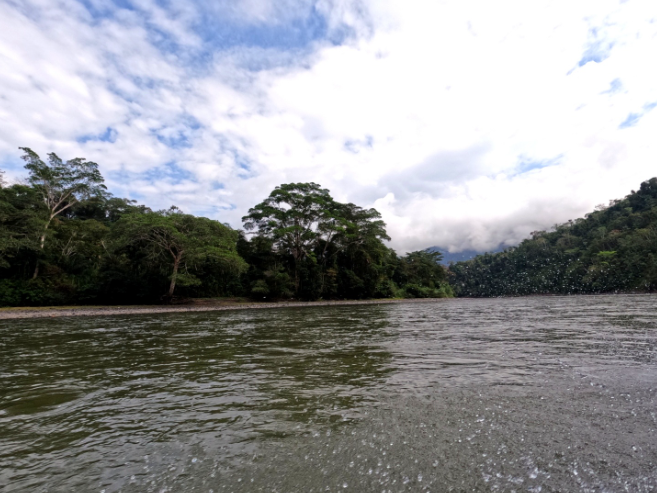
Foto: Diego Saavedra/DAR
Our elites seek to repeat what they did with Camisea decades ago—and the same applies to Bahuaja Sonene National Park, Manu National Park, and the Amarakaeri Communal Reserve (Bill No. 14288/2025-CR, 2026). Hence, the old accusation of the «gardener’s dog» (García, 2007) remains pertinent—the one that cast environmentalists as the very people preventing Peruvians from freely utilizing their natural resources, even though it was far more likely that, by preserving our biodiversity and human rights, we were simply preventing a privileged few from exploiting the commons and the benefits that rightfully belong to all Peruvians. Now, they seek to extract gas without offering any guarantee that such operations will not impact Peru’s Amazonian forests. Beyond the scientific arguments and the immense biodiversity value inherent in these protected areas—home to native communities and indigenous peoples living in voluntary isolation or in initial contact—and aside from the constitutional and legal grounds for their protection, there are compelling policy arguments worth highlighting within this complex context and in light of the global fight against climate change. Indeed, safeguarding our natural heritage becomes essential for securing our prospects amidst a global struggle for natural resources.
Attempts to undermine our protected areas are nothing new. More than fifteen years ago, an effort was made to reduce the size of Bahuaja Sonene National Park in order to permit extractive activities within the Candamo region. Subsequent attempts have followed (Gamboa Balbín, 2013), and events over the intervening years have demonstrated that the risks of environmental and social impacts have remained ever-present—largely due to a weakening of the State’s regulatory capacity:
First, the State has never fully committed itself to elevating its environmental and social standards regarding operations such as extended-reach pipelines, which could serve to minimize impacts within these types of protected areas. Instead, the adoption of such practices remains at the sole discretion of the operator, constituting nothing more than a recommended «best practice» rather than a mandatory requirement. Second, in recent years, regulations have been enacted to weaken institutional frameworks, environmental regulations, and their associated oversight and monitoring mechanisms. This regulatory relaxation raises serious doubts regarding the State’s capacity to safeguard conservation targets should oil operations be conducted within fragile ecosystems.
Finally, if environmental damage were to occur—such as the spills involving 5,500 barrels of oil in the rivers and forests of the Loreto Amazon region (Editor Gobernanza y Gestión Ambiental, 2022; Honty, 2016; Oxfam, 2023), or the half-million gallons (12,000 barrels) spilled into Peruvian waters off Ventanilla (Fundación Medio Ambiente y Derechos Fundamentales, 2026; Instituto del Mar del Perú, 2026)—there is no guarantee that remediation efforts would be carried out with the requisite efficiency. Indeed, the historical remediation of oil pollution in Loreto has only just begun—in 2025—after 50 years of oil operations in the region.
Final Reflections
We are not opposed to harnessing Peru’s natural gas; however, we are opposed to—once again—allowing a select few to attempt to profit from this highly prized resource. This seems to be the story of Peru: a history of poor decisions, a history of corruption (Quiroz, 2019). To prevent this, let us foster a transparent, broad, and frank debate—one that is technical in nature and offers concrete proposals—so that the next administration may make informed decisions (Alza, 2026). Let us not wait for the idea of nationalizing Camisea to take root (Editor Caretas, 2026)—as has been suggested in the past—thereby creating legal uncertainty regarding the rules governing our economy.
The easy solution to the pipeline rupture is to construct a parallel pipeline to increase gas and LPG transport capacity (Gestión, 2026; Tamayo, 2026); undoubtedly, there will be pressure on the next administration to make a decision that favors the incumbent companies, despite their having done nothing to merit such favor. Instead, the project should be put out to tender to foster free competition in gas transportation. Above all, however, we must ensure that the process for awarding concessions is neither opaque nor lacking in transparency, and that it aligns with a long-term strategic plan. Thus, first and foremost, we require a genuine, strategic policy that establishes rules prioritizing domestic consumption—ensuring that the gas benefits all Peruvians, remains both accessible and affordable, and is managed sustainably; that is, without encroaching upon protected areas, given that there remains a vast amount of territory yet to be explored. Furthermore, these measures must be integrated into a broader policy aimed at diversifying our energy matrix; hydroelectric power and non-conventional renewable energy sources must be evaluated according to the following weighting criteria: security, equity, profitability, and energy sustainability (Gamboa, 2011). Fifteen years ago, Peru secured loans totaling $360 million from the IDB, which resulted in the production of planning documents (R. GARCÍA Consultores S.A. et al., 2012). While these may not constitute perfect formulas, the lessons learned—from both the successes and the failures of our past actions—must surely serve some purpose. Let us not repeat the mistakes of the past. May the past teach us to make better decisions with the future of our children in mind.
References
Adrian, T., Azour, J., Chalk, N., Gourinchas, P.-O., Kammer, A., Selassie, A., Srinivasan, K., & Valdés, R. (2026, marzo 30). How the War in the Middle East Is Affecting Energy, Trade, and Finance. IMF. IMFBlog. https://www.imf.org/en/blogs/articles/2026/03/30/how-the-war-in-the-middle-east-is-affecting-energy-trade-and-finance
Alza, R. (2026, marzo 16). Camisea no cubriría la demanda de gas del Perú hacia 2040, advierten. Rumbo Minero. https://www.rumbominero.com/peru/noticias/hidrocarburos/camisea-no-cubriria-la-demanda-de-gas-del-peru-hacia-2040/
Barandiarán Gómez, A. (2008). Camisea y el Fantasma de una Política de Hidrocarburos en el Perú. Derecho Ambiente y Recursos Naturales. https://dar.org.pe/archivos/publicacion/23_camisea_fantasma.pdf
Campodónico, H. (2026, marzo 5). Voladura de gasoducto: Otra vez llueve sobre mojado. OtraMirada. https://otramirada.pe/voladura-de-gasoducto-otra-vez-llueve-sobre-mojado
Campodónico Sánchez, H. (2018). El gran fraude de la exportación de gas. En E. Toche (Ed.), Perú Hoy, Sin paradero final (pp. 283-302). DESCO. https://www.desco.org.pe/recursos/site/files/CONTENIDO/1220/15_Campodonico_PHj18.pdf
Cárdenas, J. (2026, agosto 3). Propuesta de TGP para ampliar la concesión del transporte de gas natural por 10 años más no contempla ducto alterno. Ojo Público. https://ojo-publico.com/6147/propuesta-tgp-para-ampliar-su-concesion-no-incluye-ducto-alterno
Dávila, J., Cueto La Rosa, V., & Ávila, R. (2012). El proyecto de exportación de PERÚ LNG y la gobernanza energética nacional. Derecho Ambiente y Recursos Naturales. https://dar.org.pe/archivos/publicacion/peru_lng_final.pdf
Dávila, J., & Gamboa Balbín, C. (2010). Los Contratos del Proyecto Camisea: ¿Qué tanto ganamos? (pp. 1-36). Derecho Ambiente y Recursos Naturales. https://dar.org.pe/archivos/publicacion/14_contratos_camisea.pdf
Dávila, J., & Gamboa, C. (2010). Análisis Legal de los Contratos de Transporte del Proyecto Camisea. Derecho Ambiente y Recursos Naturales. https://dar.org.pe/archivos/publicacion/transporte_camisea.pdf
Editor Caretas. (2026, abril 1). Antauro Humala propone a Cusco como la capital y nacionalizar Camisea: “Se rompe el ducto y tranquilitos todos”. Caretas. https://caretas.pe/politica/antauro-humala-propone-a-cusco-como-la-capital-y-nacionalizar-camisea-se-rompe-el-ducto-y-tranquilitos-todos/
Editor CNP2. (2009, agosto 26). Contraloría acusa a ex ministros por contrato de Camisea. ConNuestroPeru.com. https://connuestroperu.com/gas-y-energia/contraloria-acusa-a-ex-ministros-por-contrato-de-camisea/
Editor Gobernanza y Gestión Ambiental. (2022, septiembre 17). Derrame de petróleo golpea nuevamente zona de Cuninico en Loreto. Derecho Ambiente y Recursos Naturales.
https://dar.org.pe/derrame-de-petroleo-golpea-nuevamente-zona-de-cuninico-en-loreto/
El Gato Encerrado. (2026, marzo 2). Se rompe gasoducto de TGP y no habrá gas por 14 días. Inminente desabastecimiento de GLP y GNV – Gato Encerrado. https://www.gatoencerrado.net/se-rompe-gasoducto-de-tgp-y-no-habra-gas-por-14-dias-inminente-desabastecimiento-de-glp-y-gnv/
Elliott, R. F. (2026, marzo 9). ‘The Old Game Is Back’: Oil Is a Potent Geopolitical Tool Again. The New York Times. https://www.nytimes.com/2026/03/09/business/energy-environment/oil-gas-iran-war.html
Fundación Medio Ambiente y Derechos Fundamentales. (2026). Reclamación por el derrame de petróleo en Ventanilla. Fundación Medio Ambiente y Derechos Fundamentales. https://stichtingenvironmentandfundamentalrights.com/es/derrame-de-petroleo-en-ventanilla/
Gamboa Balbín, A. M. (2013). Pueblos indígenas y conflictos socioambientales. Los casos de Camisea, Amarakaeri y Curaray. Derecho Ambiente y Recursos Naturales. https://dar.org.pe/archivos/publicacion/transiciones_extractivismo.pdf
Gamboa Balbin, C., Cueto La Rosa, V., & Dávila Ordoñez, J. (2008). Análisis de los contratos de gas de Camisea: Lecciones aprendidas sobre cómo negociar con nuestros recursos naturales (lotes 88 y 56). Derecho Ambiente y Recursos Naturales. https://dar.org.pe/archivos/publicacion/22_explotacion_camisea.pdf
Gamboa, C. G. (2011). Hidrocarburos en el Perú: Hacia dónde vamos “Cómo hacer para reducir nuestra dependencia de los hidrocarburos sin comprometer nuestro futuro…” En A. Alayza Moncloa & E. Gudynas (Eds.), Transiciones: Post extractivismo y alternativas al extractivismo en el Perú (1ra. ed, pp. 93-114). Centro Peruano de Estudios Sociales. https://dar.org.pe/archivos/publicacion/transiciones_extractivismo.pdf
García, A. (2007, octubre 28). El síndrome del perro del hortelano. Diario El Comercio. https://elcomercio.pe/185-aniversario/2007-l-el-sindrome-del-perro-del-hortelano-l-bicentenario-noticia/
Gestión, R. (2026, marzo 24). Estrecho de Ormuz y gas de Camisea: Sistemas que funcionan… hasta que fallan. Gestión. https://gestion.pe/opinion/estrecho-de-ormuz-y-gas-de-camisea-un-sistema-que-funciona-hasta-que-falla-noticia/
Hegseth, P. (2026, mayo 3). Remarks by Secretary of War Pete Hegseth at the Americas Counter Cartel Conference (U.S. Department of War). https://www.war.gov/News/Speeches/Speech/Article/4424673/remarks-by-secretary-of-war-pete-hegseth-at-the-americas-counter-cartel-confere/
Heinberg, R. (2009). Blackout. Coal, climate and the last energy crisis. New Society Publishers.
Honty, G. (2016, octubre 3). Perú: 60 derrames en 15 años. América Latina en movimiento. https://www.alainet.org/fr/node/175970
Instituto del Mar del Perú. (2026). Plataforma del Estado Peruano. Plataforma del Estado Peruano. https://www.gob.pe/institucion/imarpe/colecciones/10014-informes-sobre-el-monitoreo-del-derrame-de-petroleo-zona-de-ventanilla
Ministerio de Energía y Minas. (2025, octubre 23). Propuesta de Adenda de TGP a la fecha 22/10/2025. Propuesta de Adenda de TGP a la fecha 22/10/2025. Esta publicación pertenece al compendio Propuesta de adenda al Contrato BOOT de Concesión de Transporte de Gas Natural y Propuesta de adenda al Contrato BOOT de Concesión de Transporte de Líquidos de Gas Natural (Propuesta de adenda TGP). Gob.pe. https://www.gob.pe/institucion/minem/informes-publicaciones/7317325-propuesta-de-adenda-de-tgp-a-la-fecha-22-10-2025
Ortiz, E. G. (2025, noviembre 1). No habrá seguridad energética sin las energías renovables. La Silla Vacía. https://www.lasillavacia.com/opinion/no-habra-seguridad-energetica-sin-las-energias-renovables/
Oxfam. (2023, julio 14). Cuninico: Una larga lucha manchada de petróleo. https://peru.oxfam.org/lo-ultimo/noticias/cuninico-una-larga-lucha-manchada-de-petroleo
Pinedo, X. (2026, marzo 22). Explosión en Camisea: Comunidades olvidadas y con 15 proyectos esenciales inconclusos. Ojo Público. https://ojo-publico.com/ambiente/territorio-amazonas/canon-camisea-no-redujo-brechas-historicas-comunidades-indigenas
PL N° 14288/2025-CR, Proyecto Ley que declara de interés y prioridad estratégica nacional el desarrollo de la cuenca gasífera de Madre de Dios para el fortalecimiento de la seguridad energética del Perú y el desarrollo de la Amazonía (2026). https://api.congreso.gob.pe/spley-portal-service/archivo/MzgwNjQx/pdf
Quiroz, A. W. (2019). Historia de la corrupción en el Perú (3.ª edición). Instituto de Estudios Peruanos.
R. GARCÍA Consultores S.A., ARCAN Ingeniería y Construcciones S.A., & Centro de Conservación de Energía y del Ambiente CENERGIA. (2012). Elaboración de la Nueva Matriz Energética Sostenible y Evaluación Ambiental Estratégica, como Instrumentos de Planificación. Componente 1: Nueva Matriz Energética Sostenible y Componente 2: Evaluación Ambiental Estratégica de la NUMES (Apoyo a la Estrategia Energética del Perú Cooperación Técnica No Reembolsable N°ATN/OC-11010 -PE Contrato No. F-001-0-11010/10984; pp. 1-740). Ministerio de Energía y Minas Banco Interamericano de Desarrollo.
Repsol. (2010, octubre 6). Nota de prensa: Repsol pone en marcha la primera planta de licuefacción de gas de Latinoamérica. REPSOL. https://www.repsol.com/es/sala-prensa/notas-prensa/2010/06/10/repsol-planta-licuefaccion-latinoamerica/index.cshtml
Ríos Villacorta, A. (2012, junio 8). El gas de Camisea: «un regalo de Dios». ESAN. Conexión ESAN. https://www.esan.edu.pe/conexion-esan/gas-camisea-energia
Ruiz Caro Reyes, M. (2019). El gas de Camisea. Su historia, su realidad y las perspectivas para el Sur Andino (pp. 1-116). Grupo Propuesta Ciudadana. https://propuestaciudadana.org.pe/wp-content/uploads/2019/11/El-gas-de-camisea.-Su-historia-su-realidad-y-las-perspectivas-para-el-Sur-Andino.pdf
Salaverry, D. (2017). Informe Preliminar Comisión Investigadora encargada de investigar los procesos de selección de la concesión de línea 2 del metro de Lima, Gasoducto Sur Peruano y contrato de exportación del gas de Camisea, y la modernización de la refinería de Talara (pp. 1-266) [Comisión Investigadora]. Congreso de la República. http://www.leyes.congreso.gob.pe/Documentos/2016_2021/Informes/Comisiones_Investigadoras/OFICIO-105-2016-2017-CI-L2ML.pdf
Salazar, E. (2021, marzo 10). Las cláusulas controversiales del contrato Camisea y los actores de su posible renegociación. Ojo Público. https://ojo-publico.com/3068/las-clausulas-controversiales-la-renegociacion-camisea
Salazar Herrada, E. (2026, abril 1). La inflación de Lima Metropolitana se dispara 2,38% en marzo por la emergencia del gas de Camisea. Infobae. https://www.infobae.com/peru/2026/04/01/la-inflacion-de-lima-metropolitana-se-dispara-238-en-marzo-por-la-emergencia-del-gas-de-camisea/
Santillana, J., & Salinas, J. (2018). Historia del desarrollo del gas de Camisea. Educación En Ingeniería Química. http://ssecoconsulting.com/historia-del-desarrollo-del-gas-de-camisea.html
Subirana, K. (2026, marzo 17). Radiografía de la crisis energética en el Perú: Un sistema frágil que pone en riesgo derechos básicos. IDEHPUCP. https://idehpucp.pucp.edu.pe/boletin-eventos/radiografia-de-la-crisis-energetica-en-el-peru-un-sistema-fragil-que-pone-en-riesgo-derechos-basicos/
Tamayo, G. (2026, marzo 24). Gonzalo Tamayo, extitular del Minem: “El sistema de transporte de gas es vulnerable por la falta de un segundo ducto desde Camisea”. El Comercio. https://elcomercio.pe/economia/gonzalo-tamayo-el-sistema-de-transporte-de-gas-es-vulnerable-por-la-falta-de-un-segundo-ducto-desde-camisea-noticia/
Urgente24. (2025, octubre 20). Gas de Perú: Repsol firmó con Hunt Oil el acuerdo definitivo. Urgente24. https://urgente24.com/124899-gas-de-peru-repsol-firmo-con-hunt-oil-el-acuerdo-definitivo
Vergara, A., & Quiñón, A. (2023). ¿De Guatemala a GuatePerú? O cómo mueren las democracias sin dictador. Foreign Affairs Latinoamérica, 23(3), 51-62.
Villanueva, L. (2026, marzo 5). Rafael Belaunde: “La ideología no ha permitido que se haga más exploración de gas”. Perú21. https://peru21.pe/politica/rafael-belaunde-la-ideologia-no-ha-permitido-que-se-haga-mas-exploracion-de-gas/