

Hugo Che Piu Deza
Derecho, Ambiente y Recursos Naturales
Whenever I am in the Amazon and the moment comes to sing the National Anthem, a certain unease takes hold of me as I reach the lines «…may we live peacefully in its shade, and as the Sun is born over its peaks…» What peaks do you see the Sun rise over when you wake up in the Amazon? It is, without question, an anthem conceived from the coast, one that struggles to see the Amazon beyond the shadow of the Andes. As a rule, when we talk about El Niño and its impacts, it is very hard to look past the coast — let alone to look toward the Amazon.
Today we are all talking about the El Niño emergency, about its torrential rains and about the threatening scenarios of flooding and overflowing rivers. Almost all of the concern hovers over the Peruvian coast, and over the northern coast in particular. We have heard many times that this will not only be a Coastal El Niño but a Global El Niño as well. Yet not even the word «global» leads us to think beyond the «coastal.» El Niño also looms over the Amazon as a mortal danger, and one with potential impacts over a far longer term.
In her recent Message to the Nation, President Keiko Fujimori spoke of the threat of climate change and of El Niño. She voiced the urgent concern of moving from late reaction to timely prevention, and described how this phenomenon has the potential to sow misery in the north, the centre and the south of our country. But when she turned to urgent measures, she focused solely on the coast: large-scale river dredging, the construction of riverbank defences and watershed protection. A Message to the Nation leaves little room to elaborate on the full range of measures that need to be adopted. But, Madam President, Mr Prime Minister, Ministers: the Amazon is just as vulnerable to El Niño, and it requires your concern, your attention and your action, just as the rest of Peru does.
It is already well known to many public institutions (CENEPRED, SENAMHI, MINSA, SERNANP, SERFOR and others) that El Niño events bring heatwaves and droughts to the Amazon, creating conditions ripe for forest fires and for food, health and economic crises. Many of these crises unfold far from urban centres, which is why they are little known and receive less attention. Other impacts may be graver still, given the risks they pose to indigenous peoples living in isolation and to biological diversity. All of us who live in, work in and love the Amazon must raise our voices, put our shoulders to the Wheel and switch on our minds to respond to these risks. What we already know, do, and possess can be of great help to the Peruvian State’s response to El Niño in the Amazon. Prevention, response and recovery must be tasks not only for the government, but also for business, academia, civil society and communities.
Droughts
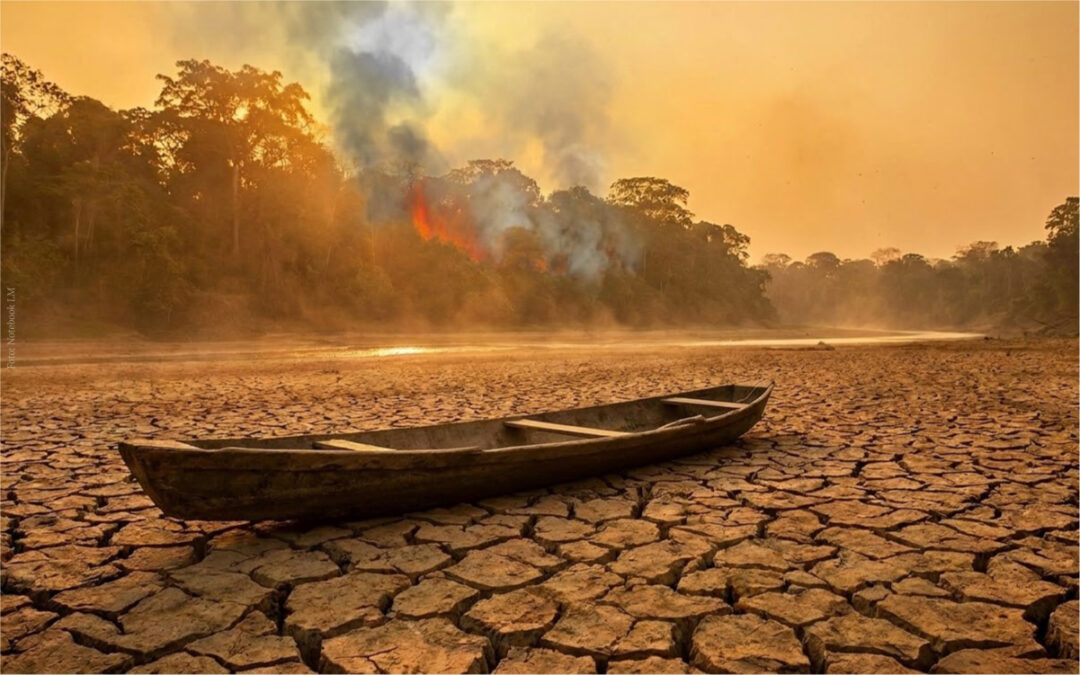
In contrast to what is observed on the coast, El Niño manifests in the Amazon mainly through droughts (Costa et al., 2024; Espinoza et al., 2014). The most severe Amazonian droughts are associated with rising sea surface temperatures in the equatorial Pacific (El Niño) as well as in the tropical North Atlantic (Costa et al., 2024). When the two coincide, the droughts caused by El Niño are compounded by those caused by the warming of the tropical North Atlantic, which since the late 1980s has been warmer than usual (Espinoza et al., 2014; Lozano Wong, 2025).
This severe drop in moisture across the Amazon basin affects the normal process of evapotranspiration in the forests and halts the vast flows of water in vapour form — the «flying rivers» — that supply moisture to much of South America (Costa et al., 2024; Humerez Alvez, 2026). This can cause significant variations in rainfall, affecting seasonality and the flood-and-drought cycles of the Amazon region (Espinoza et al., 2014). Such variations have direct consequences for fish reproduction, forest productivity, food security and the health of the populations that inhabit the forest, especially indigenous peoples (Lozano Wong, 2025).
Heatwaves
These droughts, increasingly frequent and increasingly characteristic, replace the flying rivers with waves of extreme heat (Costa et al., 2024). On top of this, climate change is increasing the frequency and intensity of extreme heat worldwide, with severe impacts on human health (Takahashi et al., 2025; UNICEF, 2023). In Peru, studies project that under climate change scenarios the Amazon would experience dangerous and deadly heat on an almost permanent basis (Takahashi et al., 2025). According to those studies, dangerous and deadly heat conditions in the Amazon would cease to be sporadic events or «waves» and become a routine feature of the climate.
What happened in 2024, one of the warmest years since pre-industrial times, offers a useful reference point for the impact of drought in the Amazon (Costa et al., 2024; Finer et al., 2025). By altering weather patterns, El Niño drastically reduces rainfall and raises local temperatures, stripping the tropical forest of its natural moisture and turning it into an ecosystem highly vulnerable to fire (Costa et al., 2024; Humerez Alvez, 2026). The isolation, supply shortages and fires that followed the terrible drought of 2024 should be taken as a measure of the heat levels that may return during 2026 and 2027.
Forest fires
Most forest fires occur in the Andean region, and historically the Amazon and coastal regions have shown low and very low incidence (Samamé Saavedra, 2023; Zubieta, 2021). Even so, the El Niño-driven droughts in the Amazon reduce moisture, trigger leaf fall and cause tree mortality, accumulating dry, highly flammable material on the forest floor (Costa et al., 2024). These dry conditions make it easier for human-caused fires — mostly set to clear agricultural land — to escape and burn areas of primary forest that would normally be protected by their own internal moisture (Costa et al., 2024; Humerez Alvez, 2026).
The severity of forest fires has risen sharply during the most intense El Niño events, breaking historical records (Finer et al., 2025). Large-scale fires do not only destroy biodiversity outright; they also feed a vicious cycle of degradation in which the forest permanently loses its capacity to generate its own rainfall, threatening to turn the tropical forest into an arid savannah (Humerez Alvez, 2026). Analyses from 2024 show that the combined impact of extreme El Niño events and climate change far exceeded the historical peaks of earlier episodes, such as the iconic «Godzilla» El Niño of 2015–2016 (Finer et al., 2025).
Friajes (cold surges)
During El Niño’s warm phase, the track and frequency of the cold fronts advancing from the South Pole towards the equator are altered (Lozano Wong, 2025). When a cold front, or friaje, arrives during an El Niño year, the thermal shock is far more violent because of the high background temperature, producing abrupt temperature drops within a few hours. As the polar air mass collides with the warm, dry air typical of El Niño periods, it triggers thunderstorms, short but high-intensity rainfall, and wind gusts that can exceed 50 km/h. When friajes arrive during El Niño-driven droughts, the strong initial winds of the cold front can spread forest fires before the dry air mass settles in (Samamé Saavedra, 2023; Zubieta, 2021).
Beyond these more abrupt changes, El Niño also increases the frequency of friajes. The Peruvian Amazon records between 6 and 10 friajes a year, mainly from May to September (Lozano Wong, 2025). Under conditions of high atmospheric variability, however, or when the patterns of the South Pacific Anticyclone are blocked, that figure can exceed 20 events a year. An estimated 1.3 million people in the Peruvian rainforest live in areas highly vulnerable to friajes, where the abrupt drop in temperature affects respiratory health, agricultural production and local aquaculture (UNICEF, 2023).
Health crises
During severe droughts, families are forced to store water in containers which, if unprotected or unsanitary, end up becoming critical breeding sites for the vectors of dengue, chikungunya and Zika (Portugal-Benavides, 2023; Takahashi et al., 2025). When river levels are low, the precariousness of basic services forces people to draw water from sources with a high bacterial load (UNICEF, 2023). The stifling heat, in turn, favours the proliferation of the agents that cause acute diarrhoea and cholera (MINSA, 1998; Portugal-Benavides, 2023). Heatwaves sharply aggravate the threat of severe dehydration, cardiovascular crises and the dreaded heat strokes, placing the lives of the elderly and of Amazonian children at critical risk (MINSA, 1998; Portugal-Benavides, 2023; Takahashi et al., 2025). These extreme conditions also leave indelible emotional scars: precarious living conditions give rise to post-traumatic stress, anxiety and depression that undermine the well-being of families in the region (Portugal-Benavides, 2023).
In rainforest territories, El Niño also manifests through violent temperature drops driven by polar air masses. This thermal shock sends respiratory infections and pneumonia soaring, hitting the health of Amazonian populations hard (MINSA, 1998; Portugal-Benavides, 2023). Where friajes produce the greatest relative decline in ambient temperature, the risk of acute respiratory infections is highest (MINSA, 1998; Lozano Wong, 2025). Smoke from fires, in addition, drastically degrades air quality, and this pollution translates into critical peaks in child hospitalisations for serious respiratory conditions (UNICEF, 2023). The situation is worse in rural areas, where dispersed settlement and geographical conditions make access to health services difficult (UNICEF, 2023). Sharp temperature drops also alter the behaviour of wild animals: such conditions cause stress in vampire bats, with a consequent rise in bites to people and possible outbreaks of sylvatic rabies (MINSA, 1998).
Partial isolation
El Niño strongly suppresses rainfall, causing historic drops in river levels and cutting off hundreds of thousands of people who depend on river transport (Costa et al., 2024; Espinoza et al., 2014). This is far more visible in large cities such as Iquitos, which has been partially isolated on several occasions as the Amazon, Nanay and Itaya rivers have fallen (Lozano Wong, 2025). Such isolation hampers the river transport of vital supplies, driving up the cost of basic goods and fuel and seriously compromising sanitation and access to drinking water. Vessels are forced to navigate extremely narrow, winding channels, which lengthens travel times and makes moving goods far more expensive (Costa et al., 2024; Espinoza et al., 2014). The most remote populations, dependent on river transport, are left without health care and without access to essential food supplies. These impacts are the most serious and, at the same time, the least known and the least taken into account.
Fires, too, can contribute significantly to this isolation of the Amazon. During the 2024 fires, Pucallpa had to close David Abensur Rengifo Airport because the density of smoke from forest fires prevented aircraft from landing and taking off. Those same fires blanketed the Federico Basadre highway in smoke and disrupted road traffic.
The food crisis
El Niño profoundly disrupts the food security of Amazonian populations, affecting local production and driving up the prices of goods brought in from outside the region (Lozano Wong, 2025). Intense droughts destroy subsistence crops and alter river regimes, sharply reducing the availability of traditional fish (Costa et al., 2024; Lozano Wong, 2025). The result is a food insecurity crisis. In the past, the loss of traditional foods forced changes in diet, which produced diarrhoea, stomach disorders and a collective sense of sadness (Lozano Wong, 2025). Seasonal instability throws off the flowering and fruiting cycles of essential forest plants such as aguaje, pijuayo, humarí and camu camu, reducing a vital source of energy and nutrients for humans and animals alike (Lozano Wong, 2025). These nutritional deficits drive up chronic child malnutrition and anemia, weakening children’s immune capacity to resist respiratory and diarrhoeal infections (Lozano Wong, 2025).
Droughts also affect river fauna. Drastic changes in river levels alter fish reproductive cycles and destroy their traditional habitats, and key species become extremely difficult to catch. During extreme droughts, moreover, oxbow lakes («cochas») become isolated, oxygen levels fall and water warms above 40 °C, causing mass die-offs of aquatic fauna (Costa et al., 2024; Lozano Wong, 2025). In 2023, hundreds of mammals — river dolphins among them — died as a result of rising water temperatures and falling oxygen concentrations (Costa et al., 2024). Droughts also have lasting effects on aquatic fauna, such as shifts in species composition and functional types, like those observed after the 2005 event, whose impacts were still being felt more than ten years later (Costa et al., 2024).
Fuel shortages
Access to energy in Amazonian households and public facilities is directly dependent on the river conditions that El Niño regulates. The overwhelming majority of households in the remotest parts of the rainforest depend on fuel delivered exclusively by river. As rivers fall during El Niño droughts, fuel transport comes to a halt or is drastically restricted (Costa et al., 2024). The boats that carry all people and goods run on that fuel, which becomes scarce and far more expensive, pushing up the price of everything else in cascade. The lack of fuel for generators causes power outages lasting several hours a day.
This energy shortfall has a knock-on effect, paralysing services that are essential to the population, such as refrigeration for vaccines and the operation of health centres and schools (Costa et al., 2024). For Amazonian populations, El Niño is not merely a climatic fluctuation but a direct threat that raises the cost of living, severs access to the resources needed for subsistence, erodes nutrition and shuts down basic social infrastructure. All of these impacts weigh heavily on the Amazonian economy — not only the subsistence economy, but also the more consolidated enterprises already connected to markets.
Risks for Indigenous Peoples in Isolation and Initial Contact (PIACI)
Because these peoples depend closely on the ecological balance of the tropical rainforest for their daily subsistence, the extreme anomalies generated by El Niño represent a direct and devastating threat to their physical and cultural survival (Espinosa et al., 2014; Lozano Wong, 2025). During the prolonged droughts caused by El Niño, PIACI are forced to expand their gathering, hunting and fishing areas because of resource scarcity in their usual territories (Costa et al., 2024). El Niño increases mortality rates among fish and among the terrestrial mammals that are key to subsistence fishing and hunting. This forced mobilisation, compounded by extreme weather conditions, pushes them towards areas with a greater presence of outsiders, dangerously increasing their exposure to unwanted contact (Espinosa et al., 2014).
This situation sharply raises the risk of exposure to diseases against which PIACI have no immunological defences, which can trigger devastating health crises. Peoples in isolation and initial contact are highly vulnerable in immunological terms to external diseases (Lozano Wong, 2025). Pressure over access to scarce natural resources likewise increases the likelihood of violent confrontations, exacerbating these peoples’ vulnerability in the face of a climate crisis (Espinosa et al., 2014). All of this critically raises the probability of unwanted contact, of hostile or violent encounters with outside actors, and of the introduction of infectious viruses that are highly dangerous to their community health (Espinosa et al., 2014).
The impact on biodiversity
The most consistent ecological response to the extreme droughts induced by El Niño is tree mortality (Costa et al., 2024). The largest trees, exposed to dry air, and the youngest trees, with shallow roots, are the first to die. This changes the structure of the forests, which tend to become dominated by fewer species, shorter in stature and more hydraulically resistant, losing the original composition of species intolerant of water deficit. Because of high tree mortality and reduced vegetative growth after the El Niño events of 2009–2010 and 2015–2016, the rainforest’s capacity to act as a natural carbon sink fell to virtually zero, accelerating atmospheric warming (Costa et al., 2024).
Just as we have seen on the coast, El Niño also brings mass mortality of aquatic mammals and fish to the Amazon. The causes are the extreme and rapid decline in river flows, high solar radiation and the collapse of oxygen concentrations (Costa et al., 2024). As noted above, these impacts are extremely long-lasting. Changes in the water regime and its timing also destroy the spawning habitats of species of high ecological and commercial importance (Lozano Wong, 2025). Mortality rates soar as well among the large terrestrial mammals that regulate and disperse the diversity of rainforest flora, such as the white-lipped peccary, the collared peccary, the red brocket deer, the paca or majaz, the giant anteater and the nine-banded armadillo (Costa et al., 2024). Water scarcity, in turn, generates physiological stress in arboreal fauna such as monkeys, reducing their feeding time and lowering food availability for frugivores because of the lack of fruit in the canopy (Costa et al., 2024). Finally, forest fires, made more frequent by El Niño, not only destroy the habitat of the flora and fauna already mentioned but also force wildlife to migrate. Analyses in biodiversity conservation areas, for example, document that threatened tropical bird species have lost between 50% and 83% of their natural habitat areas to fire devastation (Samamé Saavedra, 2023).
Shoulder to shoulder
The risks posed by El Niño in the Amazon call for timely prevention, response and recovery. Time is short, but some preventive measures are still possible: strengthening meteorological monitoring and the monitoring of heat sources and forest fires, both by satellite and from the ground; strengthening intercultural health networks to attend to the emergencies ahead; and training and equipping firefighting crews distributed across the areas at greatest risk of fire. Also urgently needed are measures to keep basic services running — health care, vaccine cold chains, schools — in the face of the fuel and energy shortages that paralyse social infrastructure during droughts.
We must also prevent supply shortages, especially of food and fuel, by identifying alternative sources to guarantee food and energy security. The use of renewable energy for productive activities and transport is now not merely strategic but urgent. It is also necessary to set up a rapid-response logistics system to guarantee the timely supply of water, food and medicines, prioritising the most vulnerable areas. Later, in the recovery phase, the Amazonian agricultural, forestry and tourism sectors will need support in the form of direct financial and technical assistance to those affected by these climate events. Without it, impoverished Amazonian populations will be even more vulnerable to illegal economies.
Indigenous peoples and their organisations, such as AIDESEP, have early warning systems built to protect their territories and capable of flagging the most serious impacts of El Niño as well as the most urgent needs arising in the territory. At the same time, these same organisations have networks able to provide — as they demonstrated during Covid — a platform for serving the most vulnerable and remote communities. There are also experiences such as PAAMARI, an integrated fire management initiative through which the Asháninka communities of the Ene River prevent, monitor and respond to forest fires. FENAMAD, ORPIO and ORAU, for their part, have the capacity to continue protecting PIACI effectively in this emergency, in which these peoples will be more exposed. These are only a few examples.
Civil society, too, has capacities that can help meet the El Niño emergency quickly. It holds highly useful knowledge and information: from the rivers, on migratory fish (WCS); from the skies, with satellite imagery of forest fires (ACCA); and from within the forest itself, through an extensive network of private conservation areas. These can contribute to a response that reduces impacts on food security, improves fire response and activates post-El Niño recovery measures. Likewise, in the face of fuel shortages, sustainable energy options adapted to local contexts have been proposed (DAR) which, now more than ever, are a viable and sustainable alternative to hydrocarbon fuels for productive activities and for the future of river transport. Academia and the private sector can offer further support for prevention, response and recovery.
In short, the response to El Niño cannot go on underestimating the depth of the risks facing our Amazon. This is a challenge that demands understanding the Amazon on its own terms. Confronting these risks — droughts, fires and the rest — is a national security imperative that requires, without half measures, real convergence between government, indigenous organisations, academia and civil society. If we truly want to move from late reaction to timely prevention, we must act «shoulder to shoulder,» bringing together ancestral knowledge, science and technology. Only in that way, by ceasing to see Peru only from the coast, can we build the resilience that our Amazon — and our future as a country — urgently demands today.
References
Andrian, L., Álvarez, C. M., Chávez, A., Díaz, E., Larrahondo, C., Serrudo, L. F., Alzamora, M., & Cárdenas, D. (2024). Efectos del fenómeno «El Niño» en la Región Andina: Una aproximación empírica (Nota Técnica No. IDB-TN-2874). Banco Interamericano de Desarrollo (BID).
CENEPRED. (2026). Estudio de escenarios de riesgo por inundaciones y movimientos en masa ante lluvias intensas asociadas al Fenómeno El Niño (Actualizado en base al escenario de lluvias del SENAMHI). Centro Nacional de Estimación, Prevención y Reducción del Riesgo de Desastres.
Costa, F. R. C., Marengo, J. A., Albernaz, A. L. M., Cunha, A. P., Cuvi, N., Espinoza, J. C., Ferreira, J., Fleischmann, A. S., Jimenez-Muñoz, J. C., Páez, M. B., Querido, L. C. A., & Schöngart, J. (2024). Policy Brief: Sequías en la Amazonía. Science Panel for the Amazon (SPA).
Espinosa, O., Gonzáles, G., & Taller de Amazonía. (2014). Cambio climático y comunidades indígenas en la Amazonía peruana. En G. Damonte & G. Vila (Eds.), Agenda de investigación en temas socioambientales en el Perú: Aportes desde las ciencias sociales (pp. 153-192). Fondo Editorial de la Pontificia Universidad Católica del Perú.
Espinoza, J. C., Ronchail, J., Guimberteau, M., Guyot, J. L., Lavado, W., & Santini, W. (2014). Eventos hidrológicos extremos en la cuenca amazónica peruana: presente y futuro. En M. Brañas (Ed.), Amazonía y cambio climático: perspectivas, oportunidades y amenazas (pp. 31-36). LIMA COP20.
Fearnside, P. M. (2012). La vulnerabilidad de la selva amazónica frente a los cambios climáticos. En S. Peniche (Ed.), II Seminario Internacional sobre la Cuenca del Río Santiago (pp. 15-32). Universidad de Guadalajara.
Finer, M., Ariñez, A., Mamani, N., Cohen, M., & Santana, A. (2025). Deforestación y Incendios en la Amazonía 2024 (Reporte Técnico MAAP #229). Monitoring of the Andean Amazon Project (MAAP).
Humerez Alvez, A. (2026). Entre el fuego y el bosque: la degradación ambiental y los dilemas de gobernanza en la Amazonía de Pando. En Dinámicas socioambientales, legales y económicas en la triple frontera Madre de Dios (Perú), Acre (Brasil) y Pando (Bolivia) (Vol. 1, pp. 13-32). Editora Científica Digital. https://doi.org/10.37885/260521862
Lozano Wong, M. A. (2025). Selva que no alimenta: cambio climático y seguridad alimentaria indígena amazónica en Perú y Colombia del 2000 al 2024 (Monografía Final). Pontificia Universidad Católica del Perú (PUCP).
Ministerio de Salud [MINSA]. (1998). El Fenómeno El Niño 1997-1998 en Perú (Capítulo 11). Oficina de Defensa Nacional, Organización Panamericana de la Salud (OPS).
Portugal-Benavides, W. J. (2023). Efectos del Fenómeno El Niño sobre la salud de las personas. Diagnóstico, 62(4), 235-238.
SENAMHI. (2014). El fenómeno El Niño en el Perú. Servicio Nacional de Meteorología e Hidrología del Perú, Ministerio del Ambiente.
Samamé Saavedra, J. A. (2023). Los incendios forestales y su repercusión en el ecosistema peruano. LATAM Revista Latinoamericana de Ciencias Sociales y Humanidades, 4(2), 273-288.
Takahashi, K., Rodríguez, D., & De La Cruz, R. (2025). Boletín Científico El Niño (Vol. 12, No. 01). Instituto Geofísico del Perú (IGP).
UNICEF. (2023). Crisis climática: Amenaza para los derechos de la niñez y la adolescencia en el Perú (Documento de Trabajo). Fondo de las Naciones Unidas para la Infancia, Ministerio del Ambiente.
Zubieta, R. (2021). Incremento de la frecuencia de los incendios forestales en el Perú: Contexto y alternativas. Instituto Geofísico del Perú (IGP).